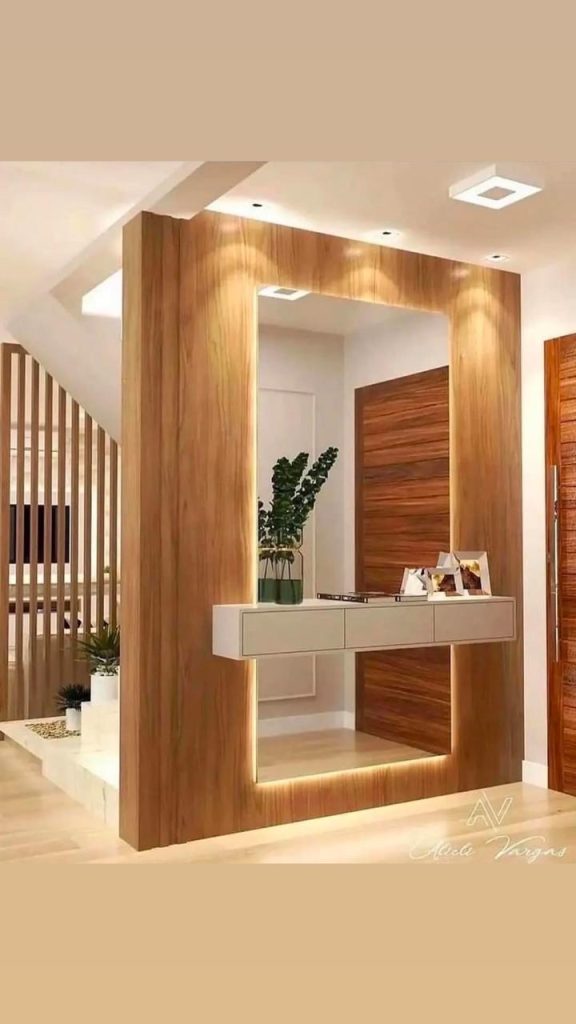
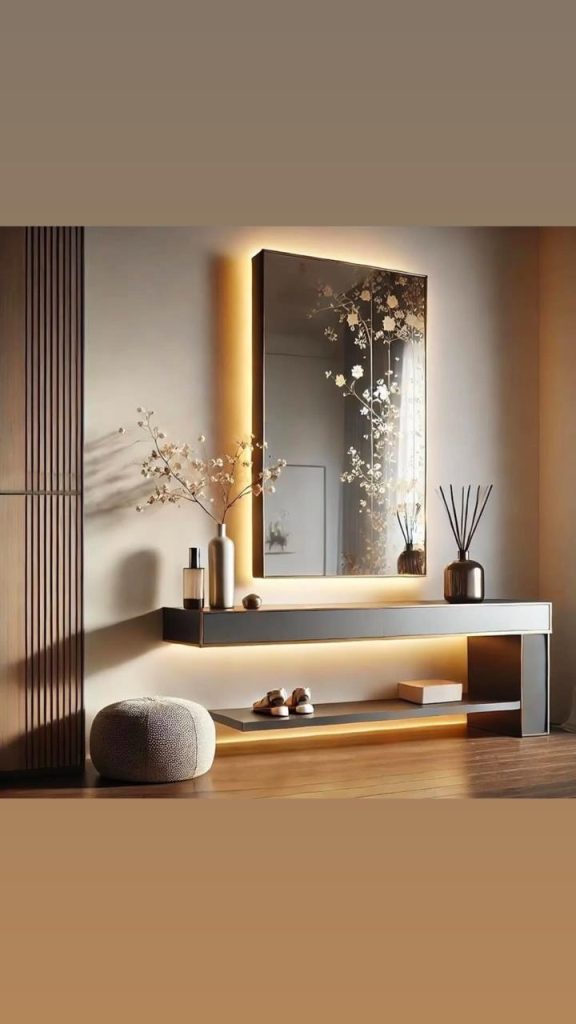
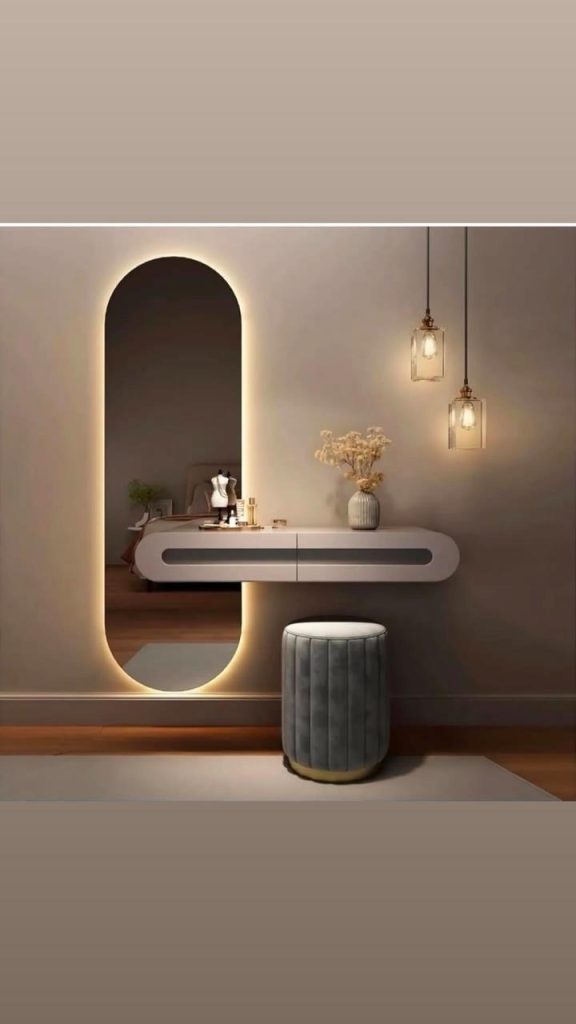
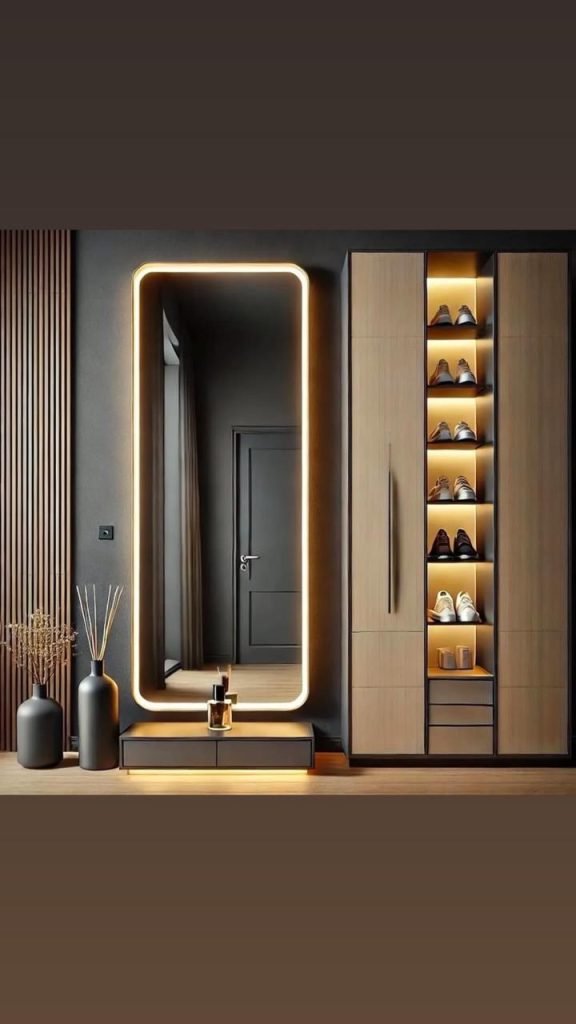
These images showcase a masterclass in Modern Minimalist interior design, specifically focusing on entryways, dressing nooks, and vanity areas. While each design is unique, they all share a common “DNA” of luxury, soft lighting, and functional art.
Here is a breakdown of the key design elements featured in these photos:
1. The “Halo” Effect (Integrated Lighting)
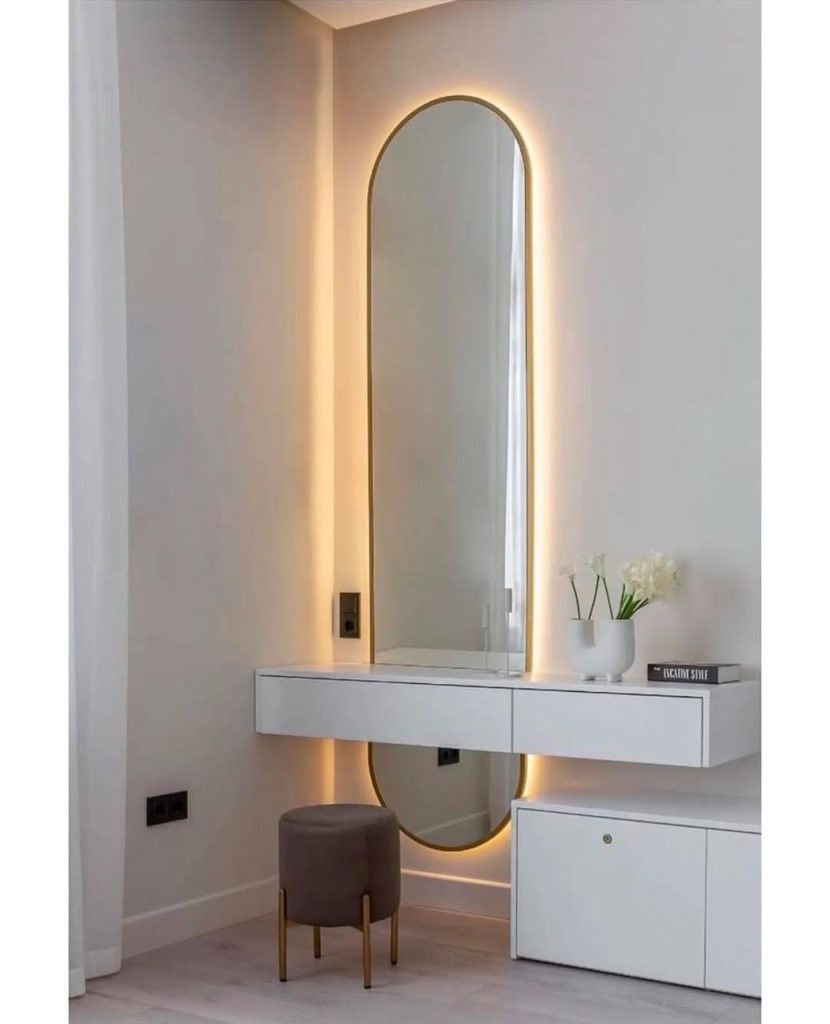
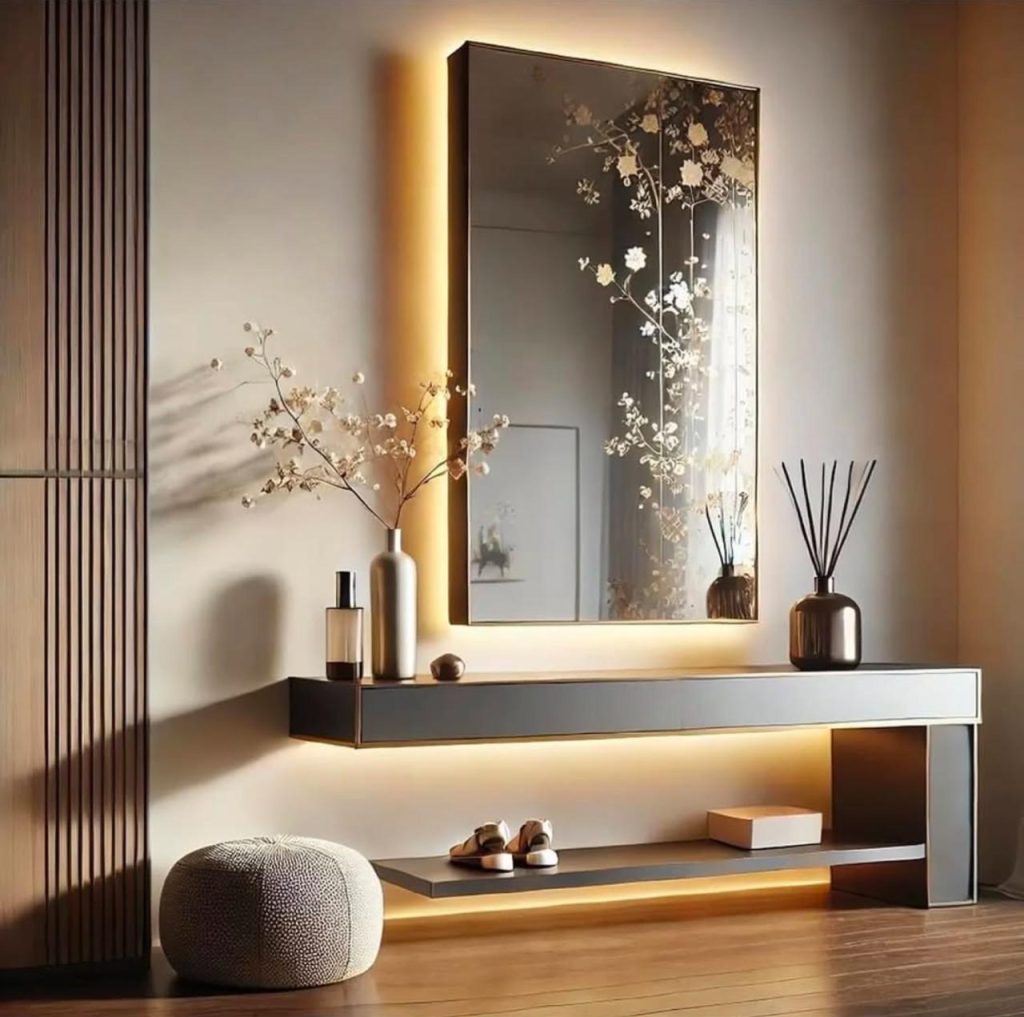
The most striking feature across all these designs is the hidden LED backlighting.
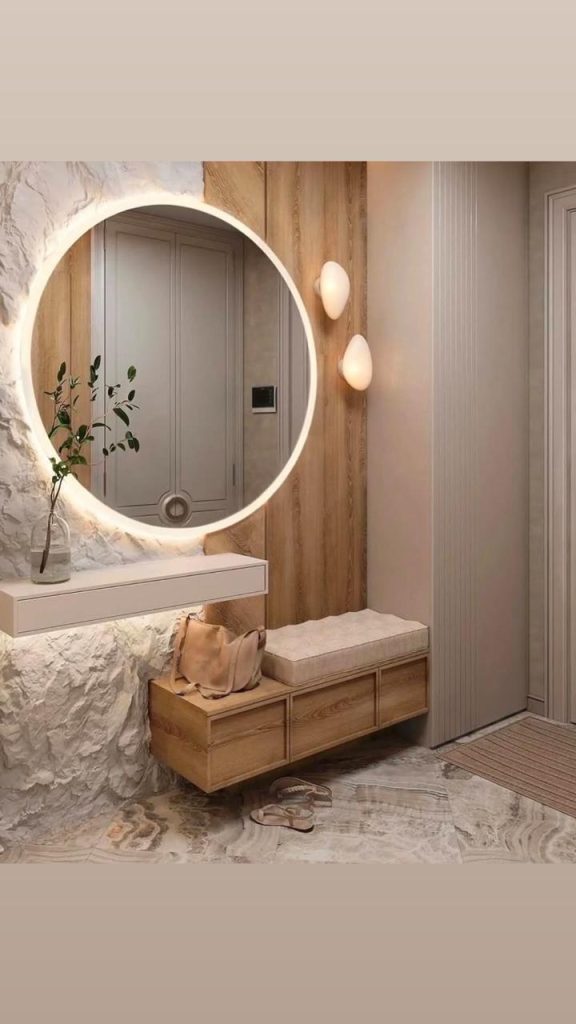
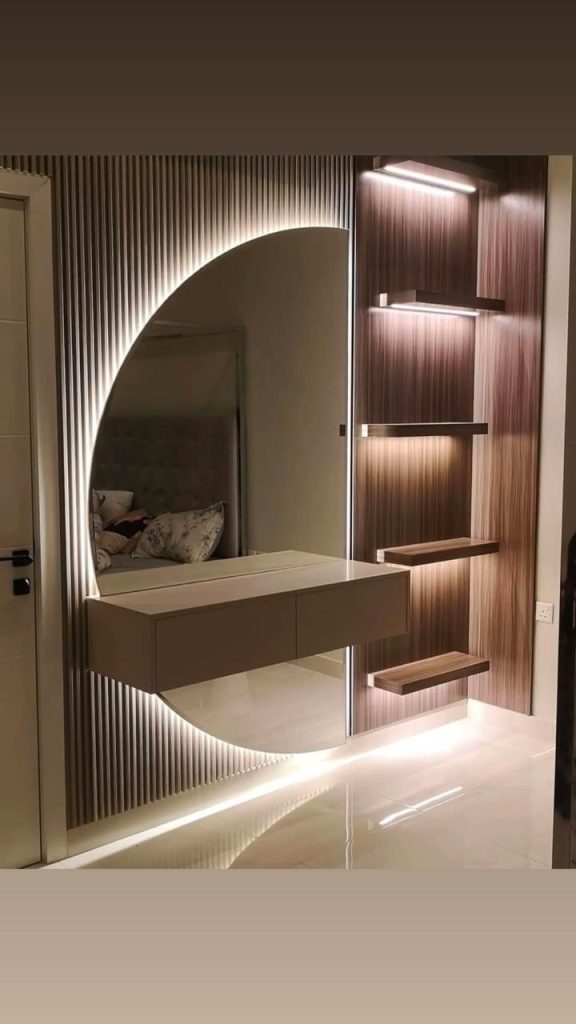
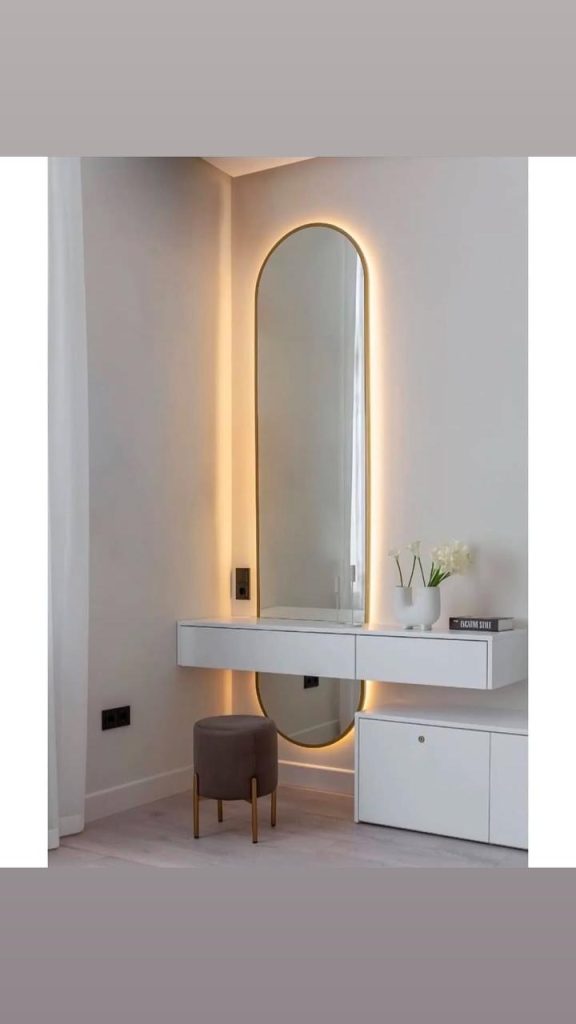
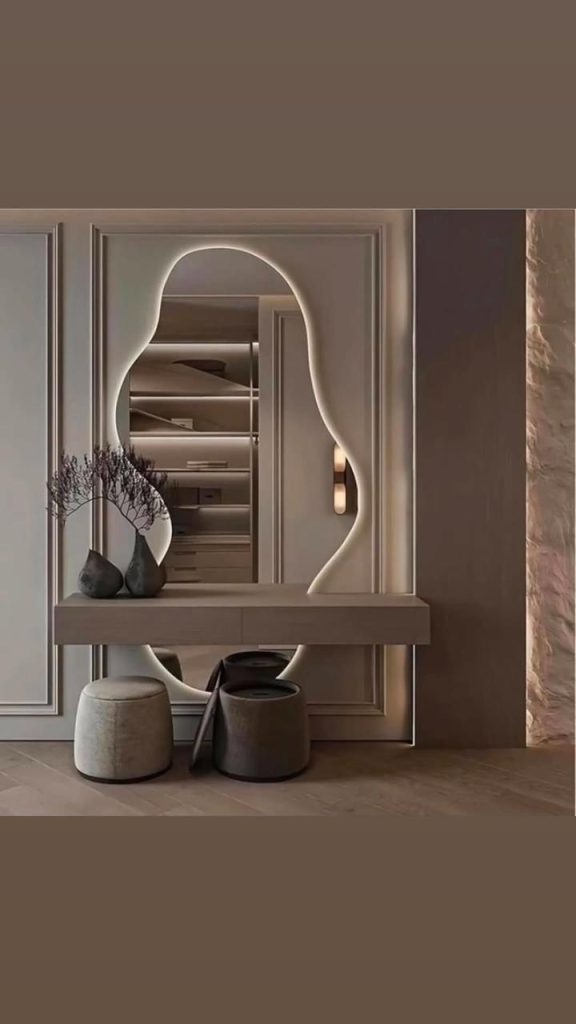
Backlit Mirrors: Every design uses high-contrast lighting behind the mirror to create a “halo” effect. This adds depth to the room and provides a soft, flattering glow that avoids harsh shadows.
Under-Shelf Lighting: You’ll notice the floating consoles often have LED strips underneath, making the furniture appear as if it’s hovering.
2. Geometric & Organic Shapes
The designs play with a mix of rigid lines and soft curves:
The “Pill” Shape: Seen in images 3, 8, and 9, the elongated oval (or pill shape) is a massive current trend. It feels more modern than a standard rectangle but more structured than a circle.
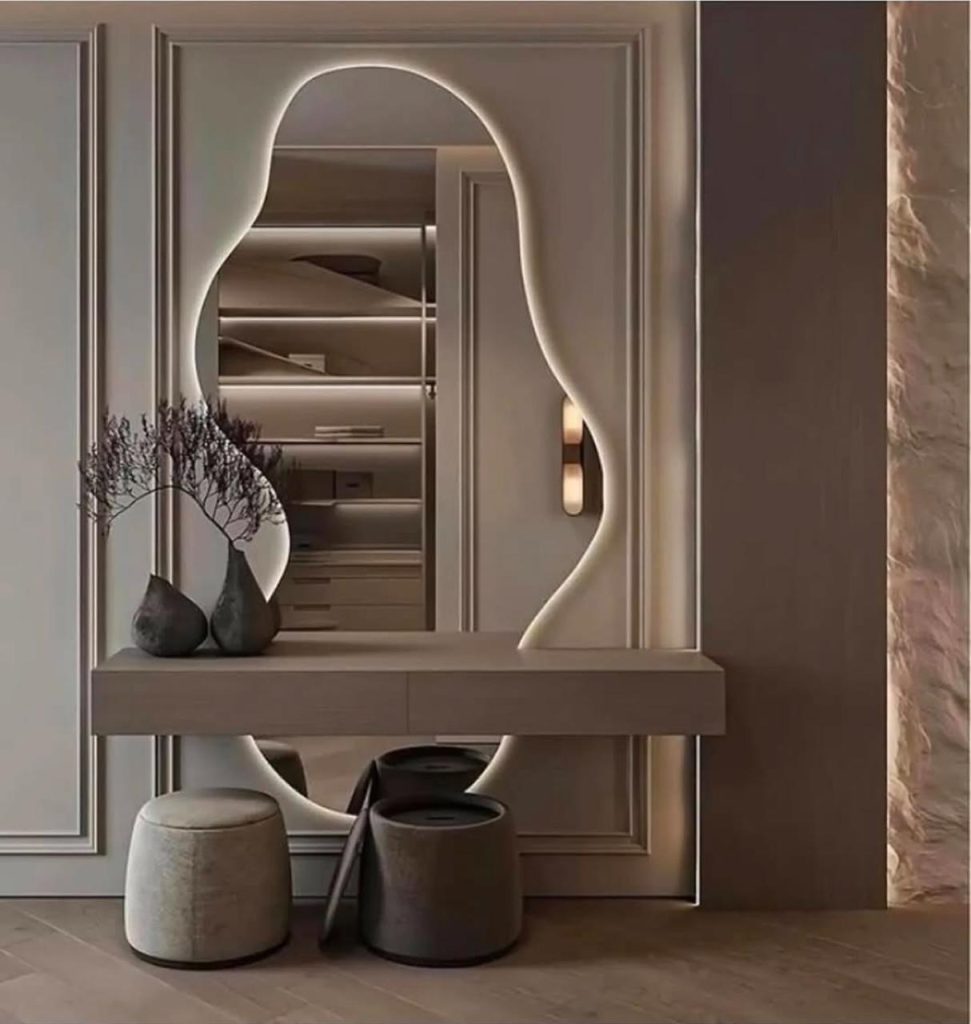
Organic Curves: Image 4 features an “amoeba” or irregular-shaped mirror. This breaks the symmetry of the room and acts as a piece of sculpture rather than just a utility item.
The Half-Moon: Image 2 uses a semi-circle mirror against vertical slats, creating a very architectural, sophisticated look.
3. Texture and Wall Treatments
These designs don’t rely on flat paint. They use texture to create visual interest:
Vertical Slats (Tambour Panels): Seen in images 2, 6, and 10. These vertical wooden or composite lines add height to the room and a sense of rhythm.
Rough Stone vs. Smooth Wood: Image 1 is a great example of “biophilic” design—pairing a rugged, white stone-textured wall with warm, smooth wood panels.
Molded Panels: Image 4 uses classic wall molding but gives it a modern twist by overlapping it with the mirror.
4. Floating Furniture
To maintain a clean, “airy” feel, almost all these designs use floating consoles.
By keeping the floor visible beneath the drawers, the space feels larger and less cluttered.
Entryway Utility: These aren’t just for looks; they provide a “drop zone” for keys and mail, often paired with a small ottoman or stool tucked underneath to save space.